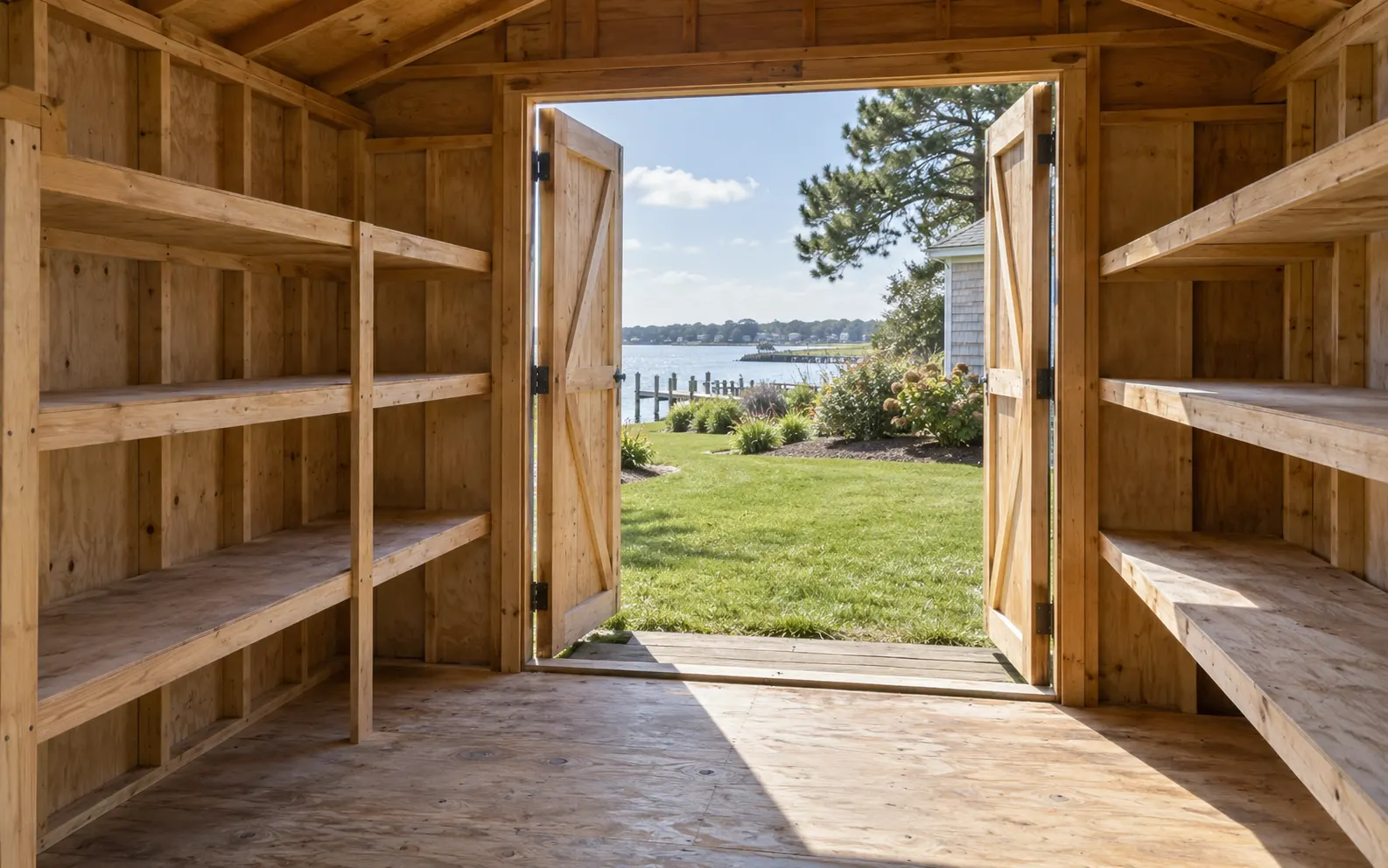
Start by deciding what stays, what goes, and which areas are safe to enter. A clear inventory and access route make the estimate more accurate; they do not require you to dismantle anything yourself.
Empty it in three groups
Make a keep pile, a removal pile, and a group that needs special handling. Fuel, paint, chemicals, propane cylinders, batteries, pesticides, and unknown containers should be identified before the appointment. Do not hide them inside boxes or mix them into ordinary debris.
Document the structure
Photograph all four sides, the inside, the roof, the floor, and the base. Include one wide image showing how close the shed sits to fences, trees, the house, and neighboring property.
Preparation checklist
- Measure width, depth, and approximate height.
- Photograph the narrowest gate and every sharp turn.
- Identify wiring, lights, outlets, plumbing, or buried lines.
- Move vehicles away from the loading area.
- Keep pets and children outside the work zone.
- Confirm what should remain after the shed is gone.
Do not enter an unstable shed
If the roof sags, walls lean, flooring has failed, or fire and storm damage is present, stay outside. Describe the condition and provide exterior photos so the first site conversation can account for it.